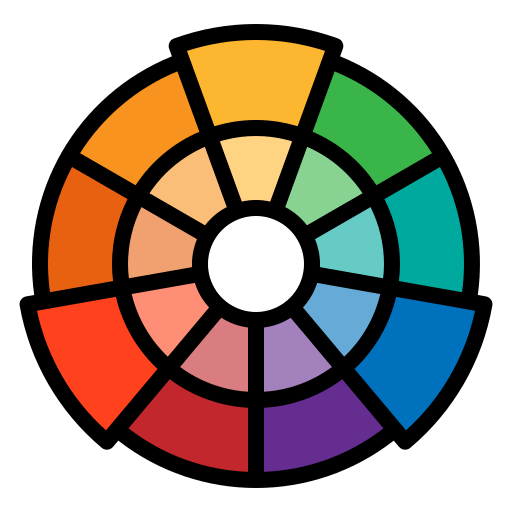
Please note that the colours on this document are
for demonstration purposes only as colours vary
with individual monitors and therefore cannot be
guaranteed as accurate.
Vat dyes are those
dyes which are applied to the substrate in reduced,
soluble form and then oxidize to the original insoluble
pigment. Common vat dyes are quinonic dyes and particularly
common are anthraquinones and indigoids. These dyes
are essentially insoluble in water and incapable of
dyeing fibres directly. However, reduction in alkaline
liquor produces the water soluble alkali metal salt
of the dye. In this leuco form these dyes have an
affinity for the textile fibre. Subsequent oxidation
reforms the original insoluble dye. Most vat dyes
are less suitable than, say, fiber reactive dyes,
for the home dyers, as they are difficult to work
with; they require a reducing agent to solubilize
them. Indigo is an example of this dye class.
Vat dye is obtained
through oxidation. It is usually very bright and will
hold up better when bleached than most other dyes.
The process is very colorfast in all respects. This
is an expensive procedure and is used mainly on high-end
products. Vat dyes include the natural dyestuff, indigo,
and the artificial dyes called by the trade names,
indanthrene, and flavanthrene. They are called vat
dyes because, being originally insoluble in water,
they undergo special preparation in large vats before
the cloth is introduced; here they are made soluble,
usually by the adding of caustic soda and hyposulphite.
In this mixture or dye liquor the textiles are soaked.
Certain chemicals are thereafter added, changing the
dyestuff back to the insoluble form in the cloth or
fiber. This is called the fixing process. All the
vat dyes are fast, especially to washing. The artificial
vat dyes have in many instances taken the places of
the older mordant dyes, and their future seems promising,
for they are cheaper and easier to apply than the
mordants, although not so cheap and convenient as
the direct dyes.
Both cotton and wool,
as well as other fibers, can be dyed with vat dyes.
"Vat dyeing" means dyeing in a bucket or
vat. It can be done whenever a solid even shade, the
same color over the entire garment, is wanted, using
almost any dye, including fiber reactive dye, direct
dye, acid dye, etc. The opposite of vat dyeing is
direct dye application, such as, for example, tie
dyeing. "Vat dyes" are a special class of
dyes that work with a special chemistry.
|